Swansea University’s Sport Communication team continues to make a significant impact on the international stage, with a series of high-profile conference presentations and collaborative panels highlighting the group’s growing influence in the fields of sport, media, and culture.
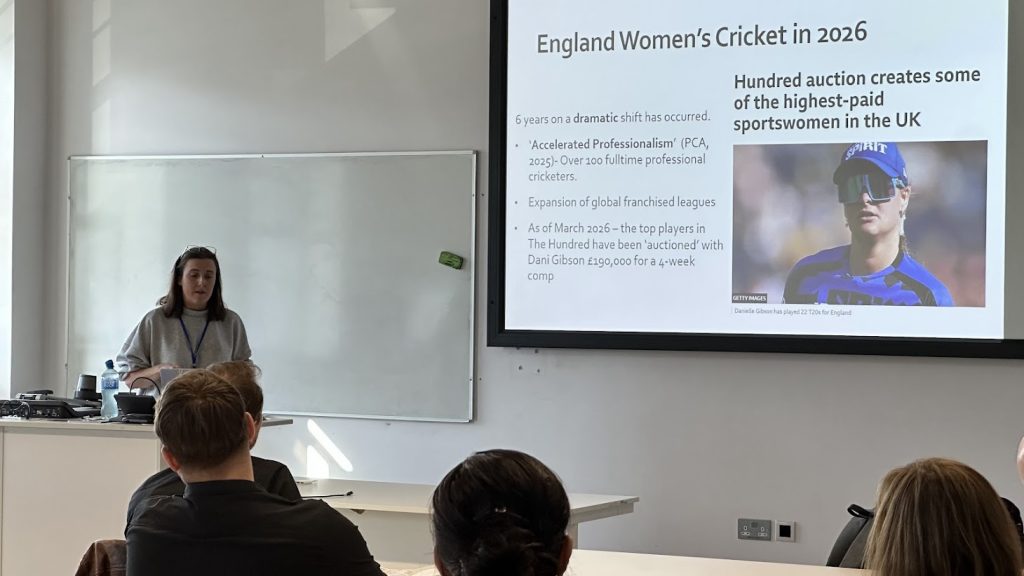
In February, Dr Hannah Thompson-Radford presented her paper, “Stop Dressing Everything in Pink”: Hyperfeminisation of the 2020 T20 World Cup Final, at the Cricket Researchers Conference. The research critically examined how media narratives surrounding a landmark moment in women’s cricket were shaped by gendered framing and commercialised femininity. The paper’s relevance extended beyond academia, earning a mention in The Guardian and contributing to wider public debates about representation in women’s sport.
March saw the team travel to Dublin City University for two major international events: the Sport & Discrimination Conference and the International Association for Sport Communication (IACS) Summit 2026. Across both conferences, Swansea researchers showcased a diverse and impactful range of work addressing inequalities and evolving practices within sports media.
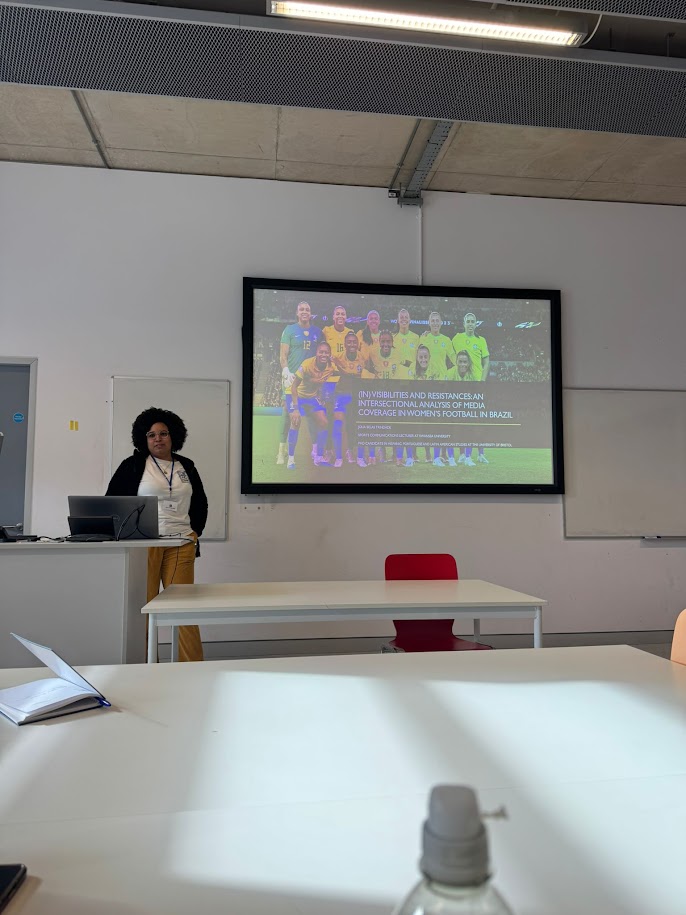
Ms Julia Belas Trindade presented findings from her PhD research on media coverage of women’s football in Brazil, while Mr Wyl Jones examined how sports journalism reports on LGBTQ+ athletes.
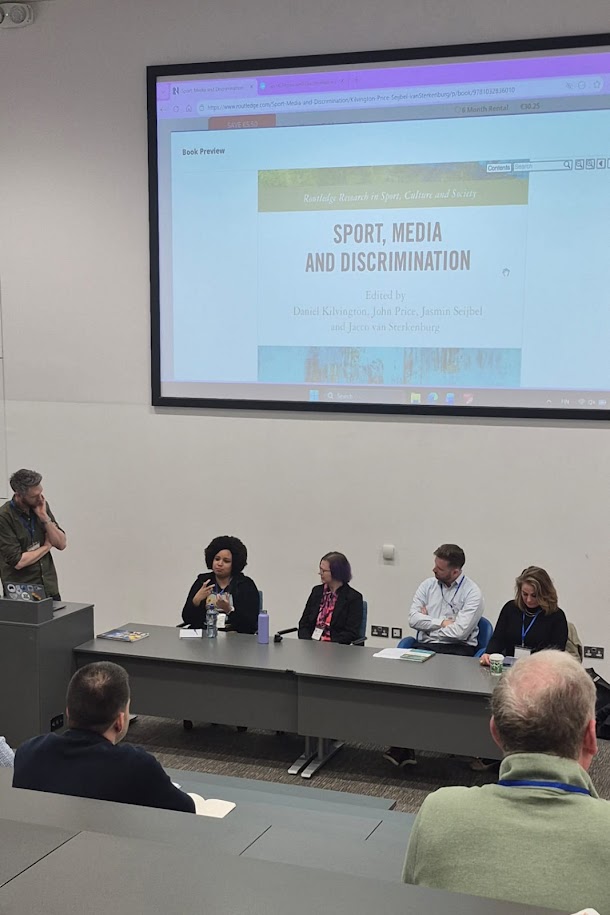
At the IACS Summit, Julia further contributed to a Routledge panel on Sport, Media and Discrimination, and, alongside Hannah, featured on a panel titled, Women’s Sports Reporting and Autoethnography: Challenging the Status Quo of Journalism and Journalism Research. They joined Rafaelle Nicholson (Bournemouth University), and Alex Harris (Northampton University). The panel explored how alternative, reflexive methodologies can challenge traditional approaches to sports journalism and research.
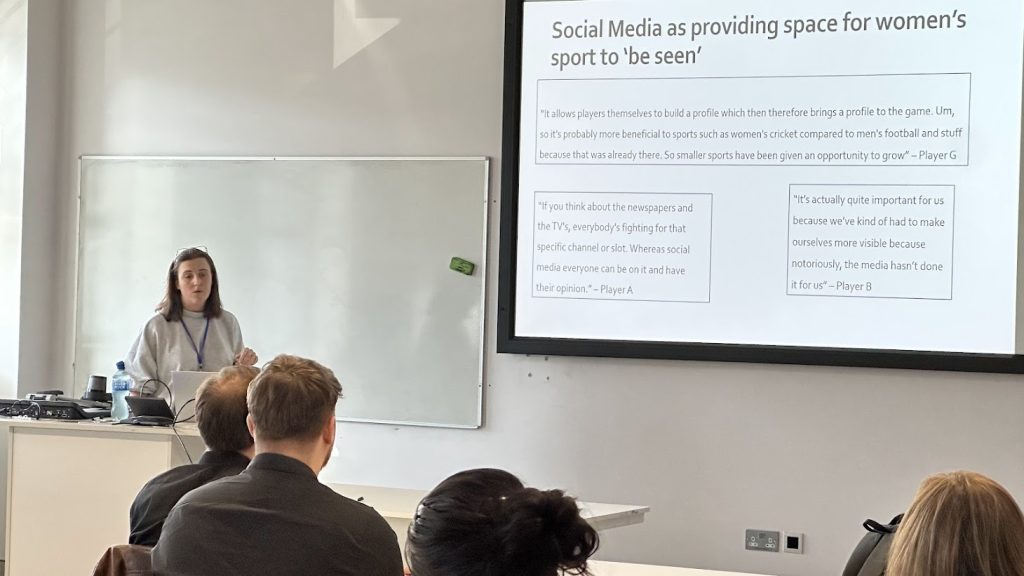
Hannah also chaired the Sport, Gender and Social Media session and presented her paper, “Theorising a Visibility Bind for Why Social Media Matters for Elite Athletes: A Case Study on England Women’s Cricket.” Her research introduces the concept of a “visibility bind,” capturing the tension female athletes face between increased exposure and intensified scrutiny in digital spaces.
These contributions reflect Swansea University’s commitment to addressing pressing issues around representation, equity, and inclusion in sport communication, while also advancing innovative research methodologies within the field.